
Visual study tools
Cell Division Concept Map: Mitosis, Meiosis and the Cell Cycle
Mitosis, meiosis and the cell cycle belong on the same page, but they should not blur into one process. Build a cell division concept map that separates stages, chromosome behaviour and outcomes, then read each connection aloud.
Create a study diagramA worked visual example
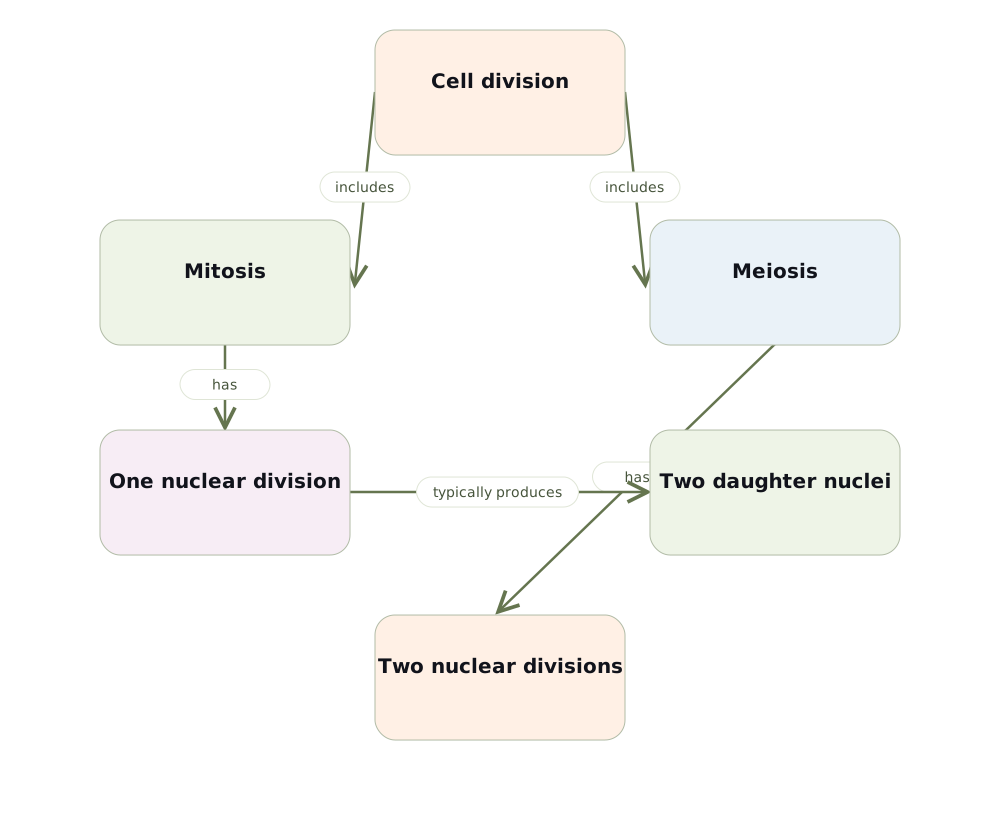
Separate the cell cycle from nuclear division
Start with the scope your course uses. Mitosis is nuclear division, while cytokinesis divides the cytoplasm. Interphase is part of the cell cycle and includes preparation for division. Avoid using “cell cycle,” “mitosis” and “cytokinesis” as labels for the same event.
Compare mitosis and meiosis on matching criteria
Place the two processes side by side and compare the number of nuclear divisions, chromosome behavior and outcomes. A typical mitotic division preserves chromosome number in the daughter nuclei. Meiosis includes two divisions and reduces chromosome number. Add your course’s examples only after those general distinctions are clear.
Use a sequence when order matters
For the stages of mitosis, use a path rather than an unordered cluster. Mark where chromosomes condense, align and separate, but do not connect events across the comparison columns unless the relationship is meaningful. Keep homologous chromosome separation distinct from sister chromatid separation.
Check the map by explaining a change
Hide one outcome and predict it from the preceding events. If the prediction is unclear, revisit the relevant course diagram. Labels such as “identical” may need qualifications, so preserve the wording and exceptions taught in your class rather than turning a simplified study map into a universal rule.
Test your understanding
- How is cytokinesis different from mitosis?
- Which event separates homologous chromosomes?
Build a map from your own material
Choose Visualize in Memorizite before uploading your document. One generation uses one scan. Review the draft, edit its explanations and relationship labels, move cards and add relevant card images. Export a PDF of the full diagram when you want a study copy. The layout depends on your source; this guide does not promise an identical generated result.
Check the science
Use your assigned course source as the reference. For additional background, see the relevant OpenStax textbook chapter. This guide and its diagram are original study scaffolds, not reproductions of a textbook figure.
Check the relationships before studying
Create a study diagram